Bone Grafts Before Dental Implants: Do You Need One?
Hearing that you might need extra work before a dental implant can feel discouraging. If you're wondering whether bone grafting is necessary for dental implants, the short answer is no, not always.
Dental implants need enough healthy bone to stay secure, but many people already have that support. Others need a graft because the bone is too thin, too soft, or too short in the area where the implant will go.
A good exam can sort that out quickly. It helps to know how dentists decide, what a bone graft does, and what other options may still work if your jawbone has changed over time.
What bone grafting does for a dental implant
A bone graft rebuilds or strengthens part of the jaw so an implant has a better base. The goal is simple: give the implant enough support to heal well and stay stable for years.
That matters because an implant isn't just a cap on top of the gums. A metal post sits in the jawbone, and the bone has to hold it firmly.
Why implants need strong bone in the first place
A dental implant acts like an artificial tooth root. Once it heals, the bone grows around it and helps lock it in place.
Healthy bone supports stability, healing, and bite pressure. If the jawbone is too narrow or weak, the implant may not have enough grip at the start, and that can affect long-term success.
Dentists also look at the exact spot. Front and back teeth don't get the same forces, and the upper jaw often has softer bone than the lower jaw.
Common reasons jawbone can shrink or weaken
Bone loss often starts after a tooth is removed or lost. Without that tooth root and normal chewing pressure, the jaw in that area can slowly shrink.
Gum disease is another common cause because it can damage the bone around teeth over time. Injury, infection, and long-term missing teeth can also reduce bone height or width.
So, is bone grafting necessary for dental implants in every case?
No. Bone grafting is not required for every implant. It becomes necessary only when the amount or quality of bone isn't good enough for safe placement.
The decision depends on bone height, width, density, and location. It also depends on the type of implant planned and whether the area has healed well after tooth loss.
A bone graft isn't an automatic extra step. It's a way to give an implant a stronger foundation when the jaw needs more support.
When a dentist may say you do not need a graft
Some patients have enough bone already. That is more common when the tooth was lost recently, the surrounding gums are healthy, and the jaw hasn't had time to shrink much.
Good bone height and width also make implant planning more straightforward. In those cases, the implant may be placed without added bone work.
A dentist also checks for active gum disease or infection before moving ahead. Even if the bone looks solid, the tissues around it still need to be healthy.
When bone grafting becomes the safer choice
A graft may be recommended when the bone is too thin, too soft, or not tall enough to support the implant. This often happens in places where a tooth has been missing for years.
The upper back jaw is a common example because bone in that area can be limited, and the sinus may sit close to where the implant needs to go. Areas affected by gum disease, infection, or past trauma may also need more support first.
That doesn't mean treatment is off the table. It usually means your dentist wants a more predictable base before placing the implant.
How 3D scans help the dentist decide
A scan takes much of the guesswork out of the process. Digital X-rays and 3D CBCT imaging show the jaw from different angles, so the dentist can measure the available bone instead of estimating it from a flat picture.
That helps with safety, timing, and placement. Your dentist can see how close the sinus or nearby nerves are, and whether the implant site has enough room for the planned post.
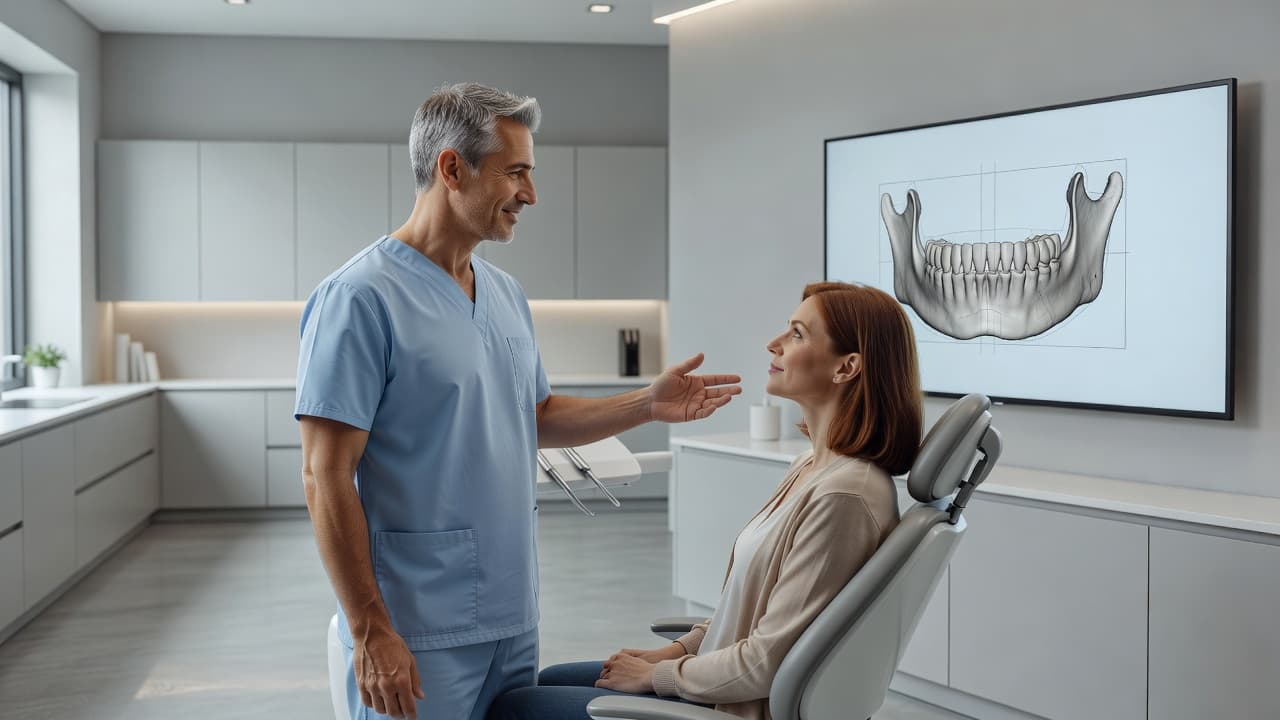
For patients, that usually means clearer answers. Instead of hearing a vague "maybe," you get a treatment plan based on what your bone actually looks like.
Dental implant options when bone is limited
A thinner jawbone doesn't always end the conversation. In many cases, there are still several paths forward, depending on the area, your health, and what kind of result you want.
Bone grafting before implants
Sometimes the answer is a small graft. For example, after a tooth is removed, a socket graft may help preserve bone in that space so it is easier to place an implant later.
Other cases need more rebuilding. A larger graft can add width or height where the bone has shrunk. Some patients have the graft first and the implant later, while others may be able to have both done at the same visit.
Healing takes time because the graft has to join with your own bone. If you want a basic explanation of why that stronger base matters, an article on bone grafts before implants gives a useful patient overview.
Sinus lift and other ways to create space
A sinus lift is often used in the upper back jaw. If the sinus sits low and there isn't enough bone height for an implant, the dentist can add bone in that area to create more room.
This is one planning tool, not something every patient needs. It only comes up when the scan shows limited height near the sinus.
Shorter implants or other treatment plans
Sometimes a different implant design may work. A shorter implant, a staged plan, or a change in the final tooth replacement can make treatment possible without the same amount of grafting.
In other situations, a bridge or denture may make more sense. A good dentist won't push one answer for everyone. The right plan depends on your bone, your bite, your health, and your goals.
What to expect if you do need bone grafting
Most bone grafting plans start with a consultation, an exam, and imaging. After that, your dentist explains whether the graft is small and local or whether the area needs more rebuilding before the implant goes in.
The procedure itself is usually less dramatic than people expect. The bigger part, in many cases, is the wait while the graft heals.
Healing time and why patience matters
Bone doesn't change overnight. After a graft is placed, your body needs time to build new support in that area before the implant can be inserted safely.
That often means a healing period of a few months, though the timeline varies with the size and location of the graft. Small socket grafts may heal faster, while larger grafts can take longer.
This extra step is about long-term strength. Rushing into implant placement when the bone isn't ready can create more problems than it solves.
How to care for the area while it heals
Follow the instructions your dentist gives you. Keep the area clean, take any prescribed medicine as directed, and go to your follow-up visits so healing can be checked.
You'll also want to avoid chewing hard foods on that side until you're cleared to do so. If your dentist gives you extra advice about brushing, rinsing, or activity, stick with it.
Good healing is usually a team effort. The graft does its job best when the site stays clean and protected.
Questions to ask at your implant consultation
A consultation goes better when you know what to ask. Clear questions can help you understand whether grafting is truly needed or whether there are other safe options.
What did the scan show about my bone?
Ask your dentist to explain the scan in plain language. You want to understand the bone's height, width, and density, plus whether the location creates any limits.
A few simple questions can help:
- Do I have enough bone for the implant you recommend?
- Is the bone too thin, too soft, or too short in this area?
- Would you place the implant now, or do you think a graft makes it safer?
When you understand the reason behind the plan, the decision feels much less confusing.
Are there other ways to place my implant safely?
It's also fair to ask about timing and alternatives. Some cases can be done in one stage, while others work better in two steps.
You can ask whether a shorter implant, a sinus lift, or another tooth replacement option makes sense for your mouth. That kind of conversation helps you make an informed choice instead of feeling rushed into one plan.

The answer depends on your bone
Bone grafting isn't always necessary before a dental implant, but it can make treatment safer and more predictable when the jaw doesn't offer enough support. The right answer comes from an exam and good imaging, not guesswork.
If you want a clear recommendation based on your own scan, Strathcona Dental Clinic is located at 8225 105 St NW #303, Edmonton, AB T6E 4H2, Canada. You can call (587) 853-5562, email info@strathconadental.ca, or contact the team through strathconadental.ca.


Comments
Post a Comment