Pediatric Dentistry in Edmonton: A Parent's Guide
Finding a dental office where your child feels safe can feel like half the battle. Most parents aren't only looking for clean teeth. They want calm voices, kind staff, and a visit that doesn't end in tears.
That's why pediatric dentistry in Edmonton matters to so many families. In everyday terms, it means dental care built around babies, kids, and teens, with attention to how children grow, learn, and react in the chair.
In a city as spread out as Edmonton, convenience matters too. Parents often want a clinic that's easy to reach, welcoming from the front desk on, and ready for both routine checkups and urgent dental problems.
What pediatric dentistry includes, and why it matters for growing smiles
Children's dentistry covers more than cavity checks. It starts with prevention, because most dental problems are easier, cheaper, and less stressful to stop early than to fix later.
That care often includes exams, cleanings, fluoride, sealants, X-rays when needed, and advice for daily brushing and flossing. It also includes watching how teeth, jaws, and bite patterns develop over time. For parents, that means fewer surprises and a better sense of what is normal.
Checkups, cleanings, fluoride, and sealants help stop problems early
Regular visits give the dentist a chance to spot small issues before they grow. A tiny weak spot in enamel may be easy to treat now, but harder later if it turns into pain or infection.
Cleanings help remove plaque in places kids often miss. Fluoride can strengthen enamel, and sealants can protect the deep grooves on back teeth where food gets trapped. Those small steps can lower the risk of cavities, especially once school lunches, snacks, and sports drinks enter the picture.
Baby teeth still matter. They help with chewing, speech, and holding space for adult teeth.
Routine visits also teach kids that dental care is normal. Over time, the chair feels less scary. That comfort can be as helpful as the cleaning itself.
Care changes as your child grows, from baby teeth to teen years
A baby's first dental visit often happens by age 1, or within six months of the first tooth. At that stage, the focus is simple. The dentist checks early growth, looks for signs of decay, and helps parents with brushing, bottles, pacifiers, and thumb sucking.
Later, school-age kids may need closer cavity prevention, guidance on loose teeth, and checks on how adult teeth are coming in. If teeth look crowded or the bite seems off, a dentist may flag it early so parents know whether an orthodontic consult makes sense.
Teen years bring a different set of issues. Sports guards, wisdom teeth concerns, diet habits, and home care all become more important. A good children's dental team adjusts advice as your child changes, instead of giving the same talk at every age.
How to choose the right dentist for your child in Edmonton
A good fit matters as much as the services on the website. Some clinics feel warm right away. Others may have strong credentials but still leave a nervous child tense and guarded.
When you're comparing options, it helps to focus on a few practical details:
| What to compare | Why it matters |
|---|---|
| Office vibe | A calm, child-friendly space can lower stress before the exam starts |
| Communication | Clear, gentle explanations help kids cooperate and help parents trust the plan |
| Location and hours | Easier travel and workable times make it simpler to keep appointments |
| Emergency support | Fast help matters when a child has pain, swelling, or a broken tooth |
The best choice is often the clinic that balances comfort, trust, and day-to-day convenience.
A kid-friendly setting can make visits easier for children and parents
Children notice tone before they notice tools. A patient dentist who kneels to eye level, explains things in plain words, and moves at a child's pace can change the whole visit.
That matters even more if your child is shy, sensitive, or already worried. Anxiety-friendly care can make a big difference. So can a team that doesn't rush, shame, or talk over your child.

The office itself also shapes the mood. Bright rooms, friendly staff, and small distractions can help kids settle in. Parents usually feel the difference too. When the team seems used to nervous children, the appointment starts to feel manageable instead of tense.
Location, hours, insurance, and emergency care also matter
Comfort is important, but logistics count. Edmonton parents often juggle school drop-off, work, traffic, and winter roads. A clinic that's easy to reach can take a lot of strain out of routine care.
Look at weekday hours, parking, and how close the office is to your home, school, or commute. Direct billing is another helpful detail, because it cuts down on extra admin when you're already managing enough. If your family uses the Canadian Dental Care Plan, ask whether the clinic accepts CDCP and how billing works.
Emergency support matters too. Kids chip teeth, wake up with toothaches, and fall on the playground. Same-day help for dental pain, swelling, or accidents can save you from hours of stress and a long night waiting for the next opening.
What to expect at your child's first dental visit
The first visit is often easier than parents expect. In most cases, the goal is not to do a lot. The goal is to help your child feel okay in the space and let the team get a simple look at their mouth.
That first appointment also gives parents a chance to ask the things that come up at home but are easy to put off.
The first appointment is usually simple, gentle, and focused on comfort
For babies and toddlers, the dentist may count teeth, check the gums, look at how the bite is forming, and watch for signs of decay. If your child is older, the visit may include a gentle cleaning and a basic exam, depending on comfort and cooperation.
Parents often get practical tips during this visit. That may include how much toothpaste to use, when to start flossing, what drinks raise cavity risk, or how to handle thumb sucking. The tone should feel calm and normal, not heavy or clinical.
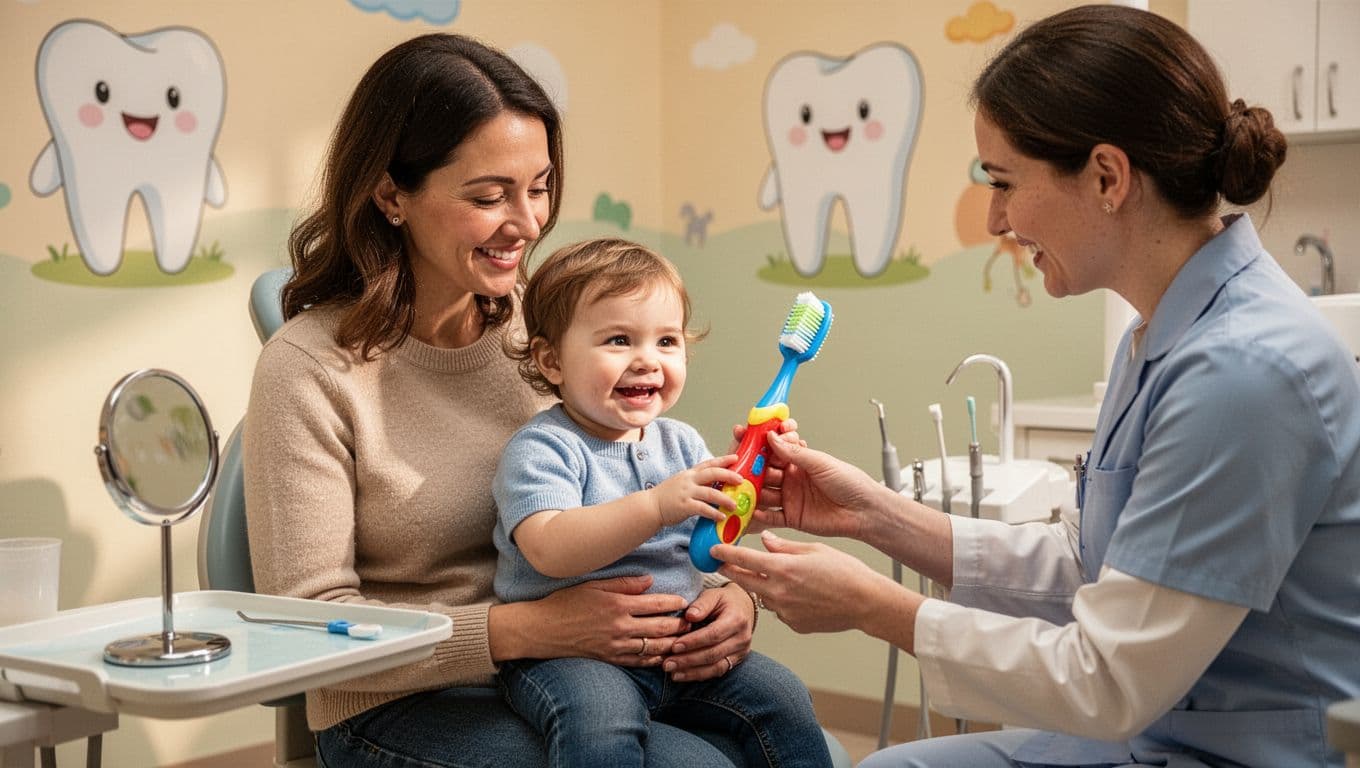
Some children sit in the chair right away. Others do better on a parent's lap. Both are common. A good pediatric visit meets the child where they are, instead of forcing a perfect appointment.
A few small steps at home can help the visit go smoothly
Timing helps more than many parents think. If possible, book when your child is usually rested and fed. A tired toddler at the end of the day often has a shorter fuse.
Use simple, positive language before the visit. Say the dentist will count teeth and help keep them strong. Try to avoid promising that "nothing will happen," because even a quick look with a mirror can feel different to a child. It's better to be calm and honest.
Bring insurance details, a health history, and a list of questions. If your child has sensory needs, past bad experiences, or high anxiety, tell the office ahead of time. That heads off surprises and helps the team prepare.
Why many Edmonton families want one dental home for every age
Many parents prefer a single dental home for the whole family. It saves time, keeps care in one place, and gives kids a familiar setting as they grow.
That kind of continuity can help children relax. When they see the same front desk team, the same hallway, and the same dental chairs over time, the office starts to feel known.
One clinic for kids and parents can save time and build trust
Family scheduling is one of the biggest reasons parents choose one practice for all ages. If siblings and parents can book on the same day, there are fewer trips across the city and fewer hours taken from school or work.
That setup also keeps records together. The dentist can see patterns, note family history, and track growth over time. For a child who starts out nervous, repeated visits to the same office often build trust little by little.

That trust can pay off during harder moments too. If a child suddenly has dental pain or chips a tooth, seeing a familiar team usually feels easier than walking into an unknown office.
A South Edmonton option may be helpful for families who want easy access
For families near Old Strathcona, Garneau, Ritchie, Queen Alexandra, Bonnie Doon, and nearby neighborhoods, South Edmonton access can make regular care much easier. That is also true for parents commuting along Whyte Avenue, 105 Street, Gateway Boulevard, or Calgary Trail.
Strathcona Dental Clinic is one local example. The clinic has served South Edmonton since 1959 and is located at 8225 105 St NW #303, near Whyte Ave. It offers kid-friendly care, same-day emergency appointments, direct billing, and accepts CDCP. Parents who want one office for children, teens, and adults may also like that it provides family care under one roof, with Dr. Abdul Wehbe and Dr. Devon Laatsch leading the team. Weekday hours are Monday through Friday, 8 am to 4 pm.
The main goal is simple: find a place your child can return to without dread.
A good choice in pediatric dentistry in Edmonton usually comes down to gentle care, strong prevention, and a clinic that fits real family life. When the office is easy to reach, clear in its communication, and ready to help during urgent moments, routine visits feel a lot less heavy.
If you're comparing dentists for your child, start by asking how the team handles first visits, nervous kids, and emergencies. For Edmonton families, that first conversation often tells you a lot.


Comments
Post a Comment